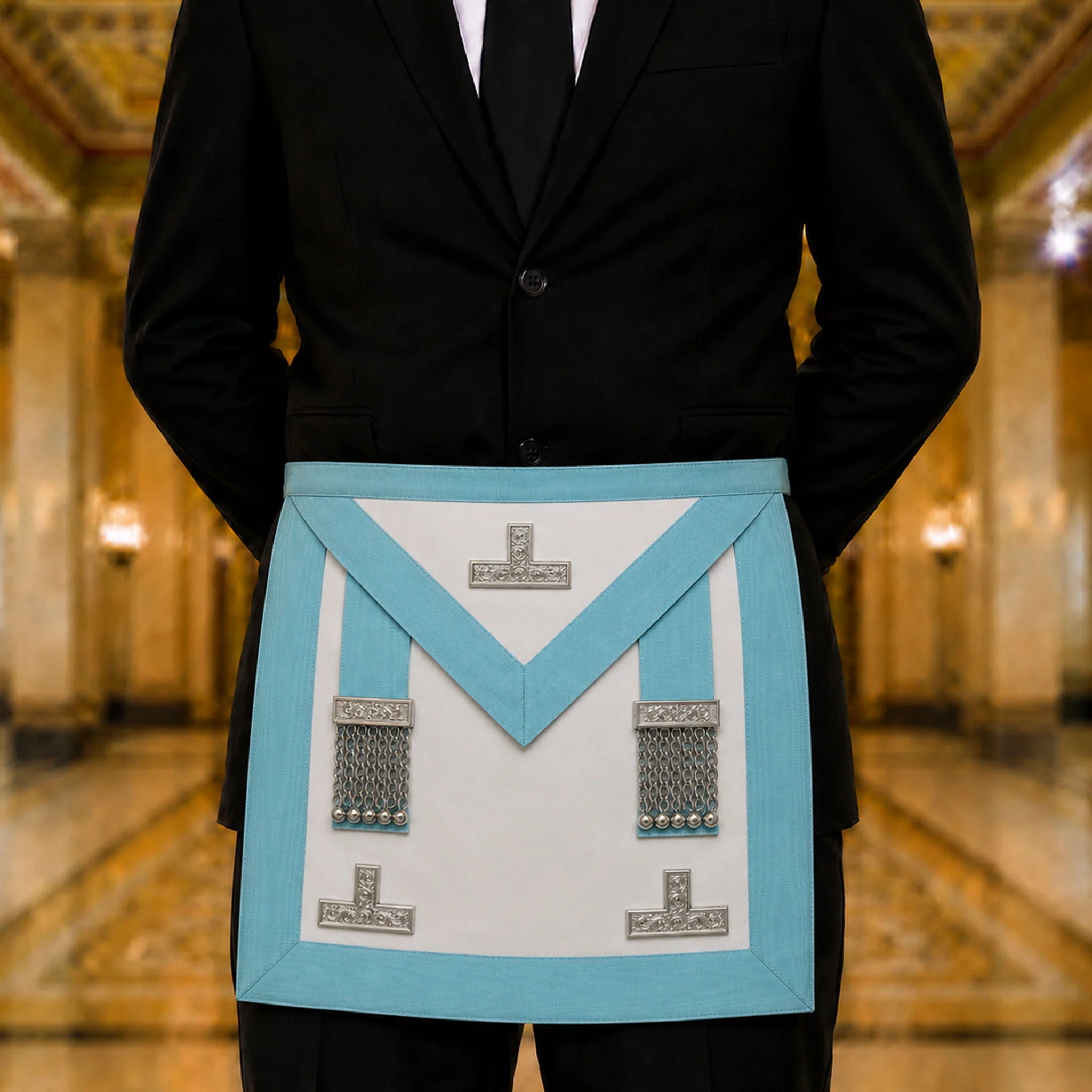
It is one of the first things many people notice about Freemasonry. A photo of a Lodge meeting, a formal procession, or a public Masonic event will often show men wearing aprons, collars, jewels and gloves. To someone outside the Craft, it can look unusual. It may even seem old-fashioned.
That is a fair reaction. Most men do not wear aprons to meetings in everyday life. We are used to suits, work uniforms, hi-vis gear, sports jerseys and academic gowns, but Masonic regalia sits in a category of its own.
For Freemasons, however, regalia is not worn for show. It is not a costume, and it is not intended to make members look important. At its best, regalia does almost the opposite. It reminds a man that when he enters the Lodge room, he is stepping into a place where character, conduct and service matter more than occupation, income or status outside the Lodge.
The apron is the best-known piece of Masonic regalia. Its meaning reaches back to the working stonemasons from whom Freemasonry draws much of its language and symbolism. In practical terms, an apron once protected a craftsman at his work. In Freemasonry, it has become a symbol of honest labour, moral work and the continuing effort to improve oneself.
That point is worth pausing on. Freemasonry often uses the language of building, but it is not really about buildings. It is about the building of character. The apron is a quiet reminder that every Mason still has work to do on himself. None of us arrives complete.
This is one reason the apron matters. It is not simply decorative. It points to the idea that a good life requires effort. A man is expected to shape his conduct, govern his temper, keep his word, support his family, serve his community and treat others with decency. Those are plain duties, but they are not always easy ones.
Regalia also helps create a sense of order within the Lodge. Different pieces of regalia can show a member’s office, role or progress within Freemasonry. This is not about making one man better than another. It is more about clarity. In the same way that a mayor may wear chains of office, a judge may wear robes, or a sports captain may wear an armband, Masonic regalia helps mark responsibility.
In a Lodge meeting, the Master, Wardens, Deacons and other officers each have particular duties. The regalia they wear helps identify those roles. It also reminds the wearer that his office is not just a title. It is a responsibility to the Lodge and to the men around him.
That distinction matters. Freemasonry does not regard office as a reward for being superior. A Lodge officer is expected to serve. He prepares, attends, supports candidates, assists newer members, helps maintain standards and contributes to the life of the Lodge. The collar or jewel he wears is therefore a sign of duty, not vanity.
There is also an important levelling effect in Masonic regalia. Men come into Freemasonry from different backgrounds. One may be a tradesman, another a teacher, another retired, another just starting his career. Outside the Lodge, those differences can be obvious. Inside the Lodge, regalia helps draw attention away from the usual measures by which men are judged.
That does not mean members lose their individuality. It simply means the Lodge room is not meant to be dominated by job titles, wealth, social position or public reputation. A man is valued for his character, his reliability, his willingness to learn, and the way he treats others.
In that sense, regalia helps set the tone. It says that this is not a casual club night, even though Lodge life also includes friendship, meals and good conversation. A meeting has a proper form. There is a degree of care and seriousness about it. The wearing of regalia supports that atmosphere.
Some people may ask whether all of this is necessary in modern New Zealand. It is a reasonable question. We live in a time when many formal customs have faded. Dress standards have relaxed. Ceremony can seem strange to those who have not grown up with it.
But not everything old is empty. Some traditions survive because they continue to do useful work.
In Freemasonry, regalia helps members step out of ordinary life for a short time and focus on something different. It marks a change of setting. It helps a man remember that he is part of something older than himself, but also something that depends on his own conduct here and now.
At Lodge Tawhiri No. 166 in Hamilton, Waikato, regalia is part of the rhythm of Lodge life. Members gather, prepare the room, dress properly, take part in the meeting, then share time together afterwards. It is formal, but it is not cold. It has dignity, but it is still human.
A man enquiring about Freemasonry should not feel put off by the regalia. No one expects a new visitor to understand every apron, collar or jewel. Much of it only makes sense over time, as a member learns by being present, listening, asking sensible questions and taking part.
Nor should regalia be mistaken for secrecy. Some parts of Masonic ceremony are private to members, but the existence of aprons, collars and jewels is plainly visible. They are not there to hide something. They are there to teach, remind and order the work of the Lodge.
The better question is not “Why do Freemasons dress like that?” but “What is the clothing trying to remind them of?”
The answer is simple enough. It reminds a Freemason that he is expected to work on himself. It reminds him that office means service. It reminds him that all members meet on a common level. It reminds him that tradition can still have meaning when it is lived sincerely.
Regalia will always look a little different to someone seeing it for the first time. That is understandable. But for those who wear it properly, it is not about appearance. It is about responsibility.
For men in Hamilton or the wider Waikato who are curious about joining Freemasonry, the best way to understand these things is not only to read about them, but to make an enquiry, meet local members, and ask honest questions. Freemasonry is learned gradually, and regalia is one part of that wider experience.