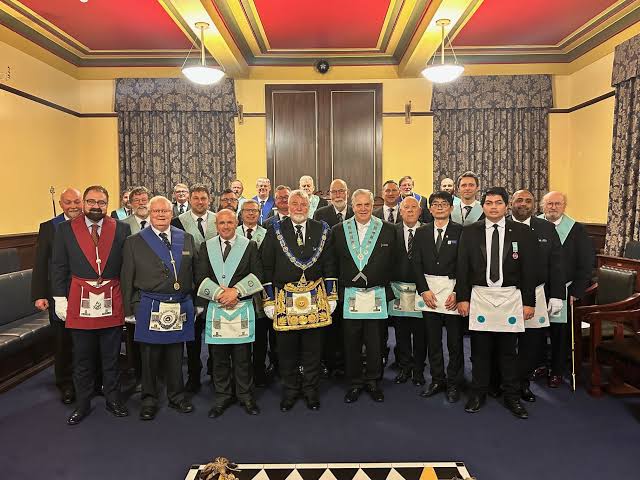
Anyone who has attended a Masonic Installation, read a Lodge summons or looked through a list of Past Masters will have encountered titles such as Bro, WBro, VWBro, RWBro and MWBro.
To someone unfamiliar with Freemasonry, these abbreviations can be confusing. Even experienced members occasionally need to check the correct form of address for a particular office or rank.
Known as Masonic titles or honourifics, they recognise offices held, responsibilities undertaken and distinctions conferred within the fraternity.
Under the Grand Lodge of New Zealand, five principal forms of address are recognised: Brother, Worshipful Brother, Very Worshipful Brother, Right Worshipful Brother and Most Worshipful Brother. Their use is governed by Rule 124 of the Book of Constitution.
Each title is associated with particular offices or ranks. The following explanations include the principal Grand Lodge appointments and their recognised abbreviations, together with historical distinctions that remain relevant today.
Brother (Bro)
Brother is the ordinary form of address for a Freemason and the foundation of all other Masonic titles.
A man becomes a Brother upon his initiation and retains that title as he progresses through the three degrees of Entered Apprentice, Fellow Craft and Master Mason.
The title is abbreviated to Bro.
Members holding ordinary Lodge offices continue to use the style Brother unless they are already entitled to a higher form of address through another office or rank.
These offices include Senior Warden (SW), Junior Warden (JW), Chaplain (Chap), Treasurer (Treas), Secretary (Sec), Director of Ceremonies (DC), Senior Deacon (SD), Junior Deacon (JD), Inner Guard (IG) and Tyler (Tyr).
Holding one of these offices does not automatically confer a higher Masonic title. Nor does undertaking responsibilities at a regional or national level necessarily entitle a Brother to a different form of address.
Worshipful Brother (WBro)
Worshipful Brother, abbreviated WBro, is most commonly associated with the Master and Past Masters of a Lodge.
The Worshipful Master is elected by the members and installed to preside over their Lodge. He is responsible for its proper government, ceremonies and general welfare, supported by his officers.
Upon installation, the Master becomes entitled to the style Worshipful Brother. Following his term in the Chair, he retains that title as a Past Master.
The title is not restricted to Masters and Past Masters. It also applies to certain Grand Lodge officers.
These include Senior Grand Deacon (SGD), Junior Grand Deacon (JGD), Grand Sword Bearer (G Swd B), Grand Standard Bearer (G Std B), Grand Organist (GO), Grand Inner Guard (GIG), Grand Steward (GS) and Grand Tyler (G Tyr).
Past holders of these offices retain the style Worshipful Brother unless they are otherwise entitled to a higher form of address.
Their corresponding past ranks include Past Grand Deacon (PGD), Past Grand Sword Bearer (PG Swd B), Past Grand Standard Bearer (PG Std B), Past Grand Organist (PGO), Past Grand Inner Guard (PGIG), Past Grand Steward (PGS) and Past Grand Tyler (PG Tyr).
The abbreviation PGD applies to both Past Senior Grand Deacons and Past Junior Grand Deacons.
Certain discontinued Grand Lodge offices also retain recognised past ranks carrying the style Worshipful Brother. These include Past District Grand Director of Ceremonies (P Dist GDC), Past Assistant Grand Director of Ceremonies (P Asst GDC), Past Grand Bible Bearer (PGBB) and Past Grand Pursuivant (PGP).
The word "Worshipful" sometimes causes confusion among those unfamiliar with Freemasonry. In this context, it is a traditional English term of respect, associated with honour and worthiness. It does not imply religious worship.
Its continued use reflects the ceremonial traditions of the Craft.
Very Worshipful Brother (VWBro)
Very Worshipful Brother, abbreviated VWBro, is associated with particular offices and ranks within the Grand Lodge of New Zealand.
These offices generally involve responsibilities extending beyond an individual Lodge, including regional leadership, ceremonial duties, administration and Masonic education.
Among those entitled to the style are Grand Superintendent of Region (G Supt), Grand Chaplain (GC), Grand Registrar (GR), Grand Treasurer (GT), Grand Superintendent of Works (G Supt W), Grand Superintendent of Ceremonies (G Supt C), Grand Superintendent of Research and Education (G Supt R&E), Grand Director of Ceremonies (GDC) and Divisional Grand Almoner (Div G Alm).
Past holders of these offices retain the style Very Worshipful Brother.
Their corresponding past ranks include Past Grand Chaplain (PGC), Past Grand Registrar (PGR), Past Grand Treasurer (PGT), Past Grand Superintendent of Works (PG Supt W), Past Grand Superintendent of Ceremonies (PG Supt C), Past Grand Superintendent of Research and Education (PG Supt R&E), Past Grand Director of Ceremonies (PGDC) and Past Divisional Grand Almoner (P Div G Alm).
The office of Grand Superintendent of Region was introduced under the regional structure adopted by Freemasons New Zealand in October 2025.
The abbreviation identifies the particular region, such as G Supt (Kaimai), with the corresponding past rank abbreviated PG Supt (Kaimai).
Lodge Tawhiri No. 166 belongs to the Kaimai Region, whose Grand Superintendent is entitled to the style Very Worshipful Brother.
Certain historical ranks also carry this title, including Past Assistant Provincial Grand Master (P Asst Prov GM), Past District Grand Master (P Dist GM) and Past Grand Lecturer (P G Lec).
The title may also be held by Brethren upon whom the appropriate Honorary Past Grand Rank has been conferred.
Very Worshipful Brother is therefore a recognised distinction associated with particular Grand Lodge offices and ranks, rather than one acquired simply through long membership or service as a Past Master.
Right Worshipful Brother (RWBro)
Right Worshipful Brother, abbreviated RWBro, is used for several of the senior offices and ranks within the Grand Lodge of New Zealand.
These include Deputy Grand Master (Dep GM), Divisional Grand Master (Div GM), Senior Grand Warden (SGW), Junior Grand Warden (JGW), Grand Almoner (G Alm) and Grand Secretary (G Sec).
These offices carry substantial responsibilities for the leadership, administration and governance of the Craft at a national or divisional level.
Past holders of these offices retain the style Right Worshipful Brother.
Their corresponding past ranks include Past Deputy Grand Master (P Dep GM), Past Divisional Grand Master (P Div GM), Past Grand Almoner (PG Alm) and Past Grand Secretary (PG Sec).
For both Senior and Junior Grand Wardens, the recognised past rank abbreviation is Past Grand Warden (PGW).
The Constitution nevertheless distinguishes between certain categories of Past Grand Wardens for the purposes of precedence.
Certain historical ranks also carry the style Right Worshipful Brother. These include Past Provincial Grand Master (P Prov GM), Past Superintendent of The Freemasons Charity (P Supt TFC), and former Presidents of the Board of General Purposes and Board of Benevolence.
The style may also be held by Brethren upon whom a qualifying Honorary Past Grand Rank has been conferred.
Lodge Tawhiri has a particularly notable historical connection with this title through its Foundation Master, RW Bro George Barclay P DepGM, whose Masonic career provides a useful example of the distinction between active office and conferred past rank.
Most Worshipful Brother (MWBro)
Most Worshipful Brother, abbreviated MWBro, is the highest form of address used within Craft Freemasonry under the Grand Lodge of New Zealand.
It is reserved for the Grand Master (GM) and Pro Grand Master (Pro GM), together with Past Grand Masters (PGM) and Past Pro Grand Masters (P Pro GM).
The Grand Master is the principal officer of the Grand Lodge of New Zealand and presides over the Craft nationally.
Upon completing his term, a Grand Master retains the style Most Worshipful Brother as a Past Grand Master. The same principle applies to a Pro Grand Master who subsequently becomes a Past Pro Grand Master.
The title recognises the distinguished office held and remains part of the Brother's Masonic style after he leaves office.
The Difference Between Office, Past Rank and Honorary Rank
Although closely related, Masonic office, rank and honour are not necessarily the same thing.
An active office is a position to which a Brother has been elected or appointed, with particular responsibilities to perform. A Grand Director of Ceremonies, for example, carries out ceremonial duties on behalf of Grand Lodge.
When a Brother completes his term, he will ordinarily retain the corresponding Past Grand Rank, subject to the provisions of the Constitution.
However, a Brother may also receive a past rank without ever having actively occupied the corresponding office.
Under Rule 171 of the New Zealand Book of Constitution, Honorary Past Grand Rank may be conferred upon a Brother who has attained the rank of Installed Master and rendered special service to the Craft.
Such an award may be made by Grand Lodge following a recommendation from the Board of Directors. The Constitution also permits the Grand Master to confer a higher Honorary Past Grand Rank upon an existing Past Grand Officer in accordance with the relevant provisions.
A Brother who has actively served as Grand Director of Ceremonies and another who has been conferred the rank of Past Grand Director of Ceremonies may therefore be entitled to the same form of address, even though their Masonic careers have followed different paths.
There are also distinctions awarded in recognition of service that do not themselves confer Grand Lodge rank.
These include the Grand Lodge Roll of Honour (R.H.), the Grand Master's Order of Merit (O.M.) and the Grand Master's Order of Service to Masonry (O.S.M.).
The letters associated with these honours may appear after a Brother's name, but the distinctions do not themselves confer a higher form of address.
A Historical Example: RW Bro George Barclay P DepGM
Lodge Tawhiri's Foundation Master, RW Bro George Barclay P DepGM, provides a useful example of the distinction between active office and conferred past rank.
Barclay was instrumental in establishing Lodge Tawhiri in 1909 and went on to become one of the leading figures in New Zealand Freemasonry.
His active Grand Lodge service included Senior Grand Warden in 1911, Assistant Grand Secretary in 1920, Grand Secretary from 1921 until 1933, and Grand Lecturer during 1933 and 1934.
In 1929, Barclay was conferred the rank of Past Deputy Grand Master in recognition of his service to the Craft.
He had never actively served as Deputy Grand Master. The rank was conferred upon him rather than being acquired through service in that office.
His earlier offices of Senior Grand Warden and Grand Secretary were themselves associated with the style Right Worshipful Brother. The conferral of Past Deputy Grand Master was therefore a further distinction, rather than his first qualification for that form of address.
His career illustrates how a Brother may hold offices in which he has actively served, alongside past ranks conferred in recognition of his contribution to Freemasonry.
It also serves as a reminder when reading historical records. A rank recorded after a Brother's name may reflect a distinction received later in life, rather than an office he held at the time of the events being described.
A fuller account of Barclay's life and service can be found in our article, RW Bro George Barclay P DepGM: Tawhiri's Foundation Master.
Why Do Some Brethren with Similar Offices Have Different Titles?
Over time, the Grand Lodge of New Zealand has made changes to its structure, offices and the ranks associated with them.
As a result, Brethren who have undertaken broadly comparable responsibilities may be entitled to different forms of address.
A useful example is the office of Director of Ceremonies.
Under the former district structure, a District Grand Director of Ceremonies held an office associated with the style Worshipful Brother.
A Brother who holds the rank of Past District Grand Director of Ceremonies (P Dist GDC) continues to be entitled to that style, unless he also holds another rank carrying a higher form of address.
Under the regional structure adopted in October 2025, a Grand Director of Ceremonies (GDC) is entitled to the style Very Worshipful Brother. A Past Grand Director of Ceremonies (PGDC) is likewise entitled to that style.
Although these offices have comparable ceremonial responsibilities, they are distinct Grand Lodge appointments with different classifications under the Constitution.
The introduction of a new office does not automatically convert an earlier past rank into its modern counterpart or confer a higher form of address upon those who held the former office.
This distinction is particularly important when preparing Lodge summonses, Installation programmes, formal correspondence and historical records.
A Brother's correct title should reflect the rank he actually holds, rather than an assumption about the modern equivalent of an earlier appointment.
Do All Regional Appointments Carry Grand Lodge Rank?
Not every appointment within Freemasons New Zealand carries Grand Lodge rank.
This distinction is particularly relevant following the introduction of the regional structure in October 2025.
A Grand Superintendent of Region holds a recognised Grand Lodge office and is entitled to the style Very Worshipful Brother.
A Region Charity Officer, however, holds an important appointment supporting and coordinating charitable activities across the region, but the appointment does not itself confer Grand Lodge rank.
Rule 115A of the Book of Constitution expressly identifies Region Charity Officer as a non-rank regional appointment.
A Brother serving as Region Charity Officer therefore retains whatever form of address he is otherwise entitled to through his existing offices or ranks.
The distinction does not diminish the importance of either appointment. It simply reflects the constitutional classification of the respective positions.
Holding responsibility within Freemasons New Zealand should not, therefore, be confused with holding Grand Lodge rank.
How Are Masonic Titles Written?
In formal Masonic correspondence, a Brother's form of address generally appears before his name, while the abbreviation for his office or rank appears afterwards.
The two serve different purposes.
For example, a Grand Director of Ceremonies is entitled to the style Very Worshipful Brother, abbreviated VWBro. The office itself is abbreviated GDC.
If the Brother subsequently holds the rank of Past Grand Director of Ceremonies, his past rank is abbreviated PGDC, while his form of address remains VWBro.
A Brother may have held several Grand Lodge offices during his career. His form of address should reflect the highest style to which he is entitled, rather than attempting to incorporate every office he has held.
In most cases, Past Grand Rank is identified by adding the letter P to the prescribed abbreviation for the corresponding active office.
There are exceptions, including Past Grand Warden (PGW) and Past Grand Deacon (PGD), for which common abbreviations are used regardless of whether the original office was Senior or Junior.
Historical offices may also retain particular abbreviations that differ from those of comparable current appointments.
The Grand Lodge of New Zealand prescribes standard contractions for Grand Lodge ranks through Collected Ruling 47.
When preparing formal documents, the correct abbreviation should therefore be taken from the Brother's recognised rank rather than constructed from memory.
Do Other Masonic Orders Use the Same Titles?
The forms of address described here apply specifically to Craft Freemasonry under the Grand Lodge of New Zealand.
Other Masonic jurisdictions may use different conventions or assign different styles to particular offices.
Likewise, additional Masonic Orders have their own traditions and forms of address.
In the Royal Arch, for example, members are known as Companions, while styles such as Excellent, Very Excellent and Most Excellent are associated with particular offices and ranks.
Holding an office in another Masonic Order does not automatically change a Brother's form of address within a Craft Lodge.
A Final Word on Masonic Rank
Masonic titles provide an established means of recognising office, responsibility and service within the Craft. They are an important part of our ceremonies, correspondence and historical records.
Yet they remain distinctions of office and rank, rather than measures of personal worth.
Freemasonry teaches its members to meet upon the level. A Brother who has served as Grand Master and one who has only recently been initiated may have very different experiences, but both belong to the same fraternity.
Whatever honours or distinctions a Freemason may receive, he remains a Brother.