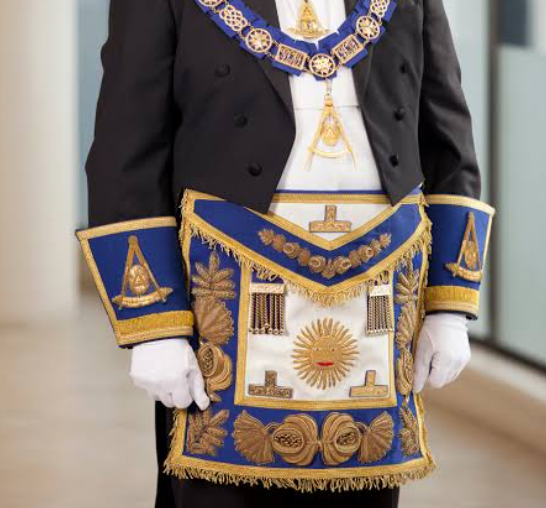
For someone visiting a Masonic Lodge for the first time, the regalia can be one of the most noticeable parts of the evening.
There are white aprons, blue collars, silver emblems and sometimes several jewels or badges worn on a Brother’s jacket. At an Installation or an official visit, there may also be members wearing darker blue regalia decorated with gold.
At first glance, it can be difficult to tell what any of it means. It may look like a complicated collection of ranks, medals and ceremonial clothing.
In New Zealand, however, the main distinctions are fairly straightforward. An apron can show a member’s progress through the Craft degrees. A collar identifies an office or responsibility. A breast jewel may represent Royal Arch membership, charitable service or a connection with an important Lodge event. Long membership is usually recognised with a service badge. Grand Lodge regalia identifies responsibility held within the wider organisation of Freemasonry in New Zealand.
Regalia is not intended to display a man’s wealth, occupation or social position. It provides a shared visual language and connects members today with customs handed down through earlier generations of Freemasons.
What is Masonic regalia?
Regalia is the general term used for the authorised clothing and insignia worn by Freemasons during Lodge meetings and other formal Masonic occasions.
At an ordinary Craft Lodge meeting in New Zealand, this may include an apron, white gloves and, for Lodge officers, a sky-blue collar with a silver-coloured collar jewel. Some members also wear authorised breast jewels or service badges. Grand Lodge officers have separate forms of regalia connected with the offices they hold or have previously held.
Why do Freemasons wear aprons?
The apron is the central item of Craft regalia. Its use reflects Freemasonry’s historical connection with working stonemasons. An operative stonemason wore an apron to protect himself and his clothing while working with stone. The modern Masonic apron is ceremonial rather than protective, but the connection with labour, skill and responsibility remains.
Freemasonry uses the language and tools of building to teach lessons about conduct and responsibility. The apron serves as a reminder of the standards expected of a Freemason and of his duties towards other people.
Under the New Zealand Constitution, the appearance of the apron changes as a member progresses through the three Craft degrees.
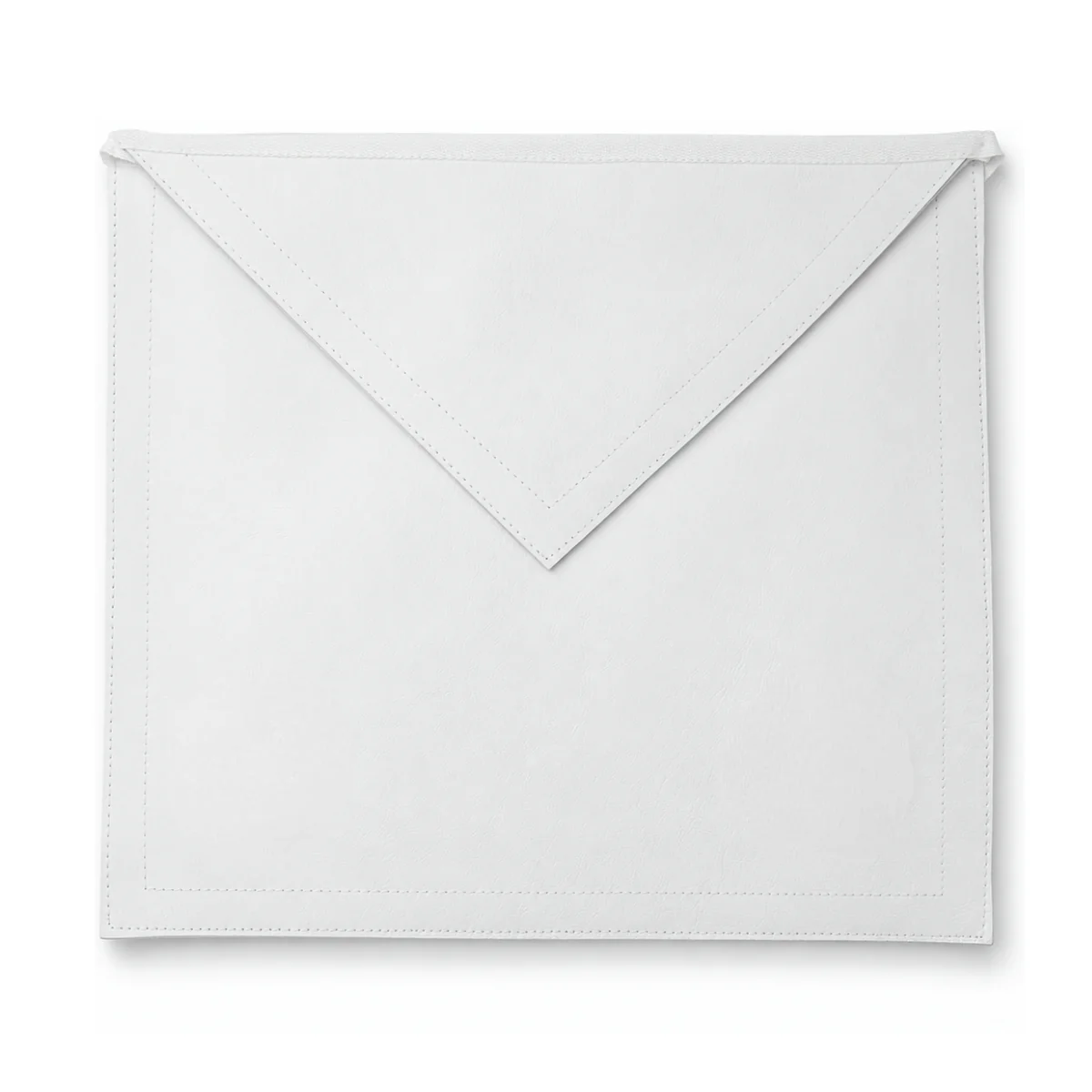
An Entered Apprentice wears a plain white apron without ornament.
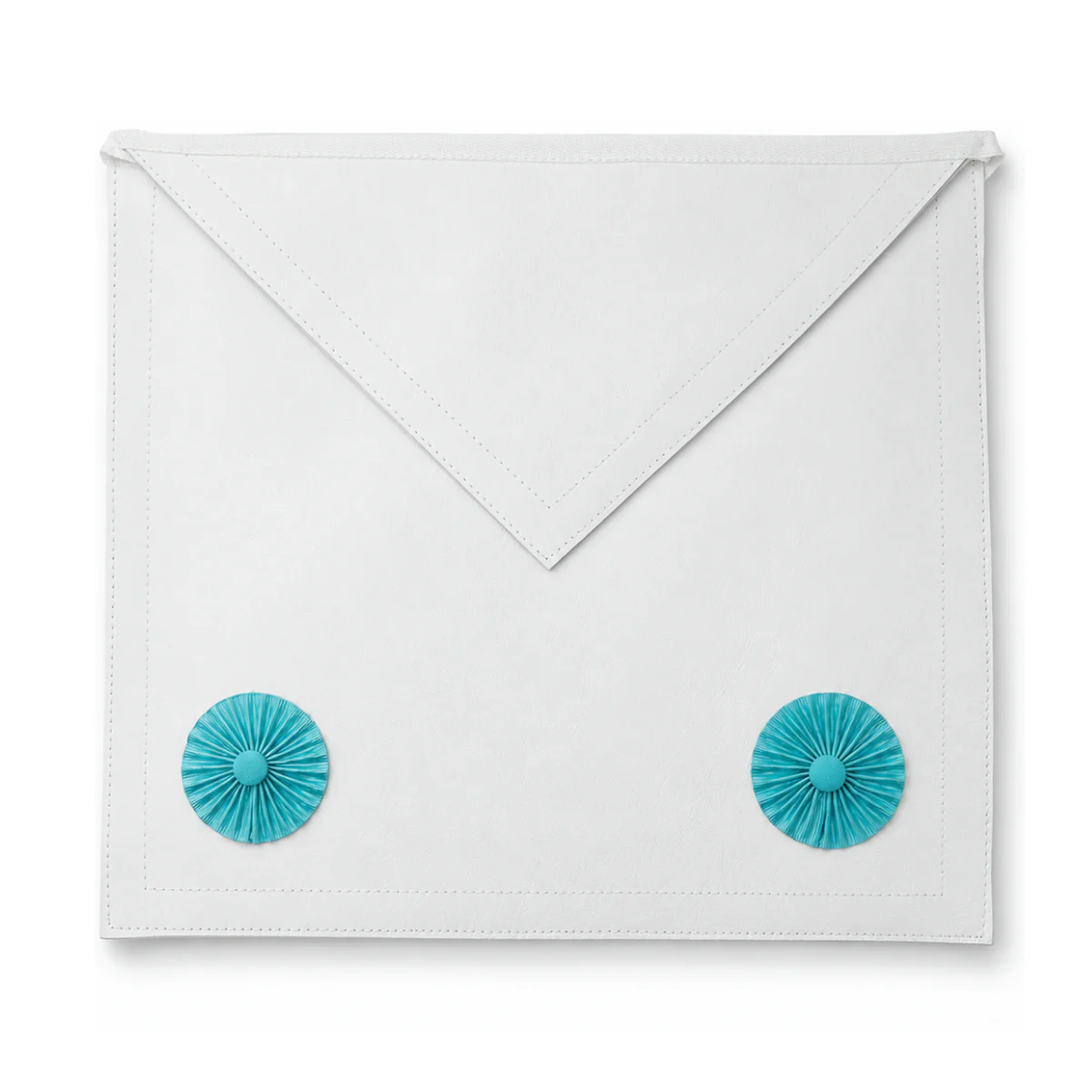
A Fellow Craft apron bears two sky-blue rosettes near its lower corners.
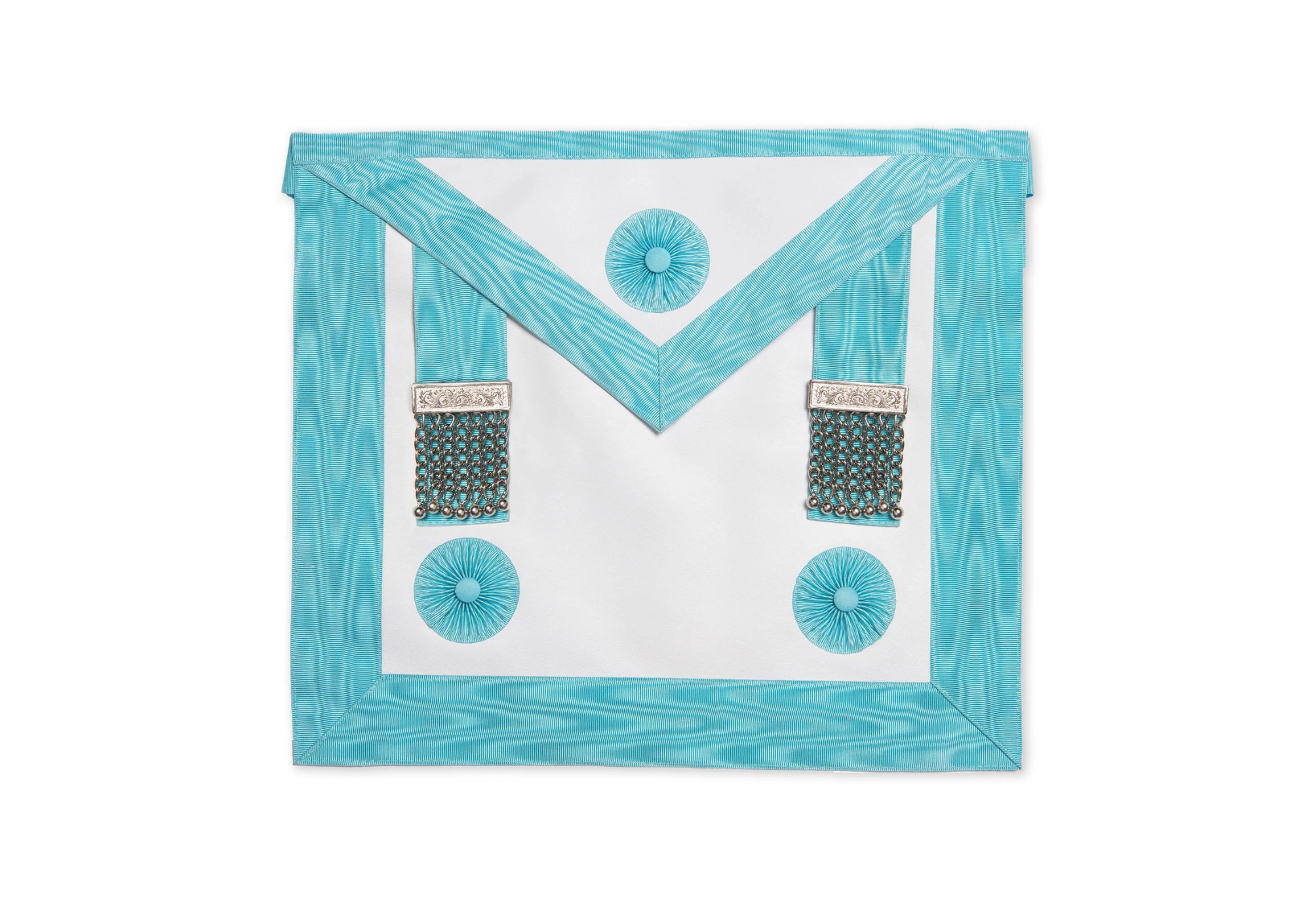
A Master Mason’s apron has sky-blue edging, silver-coloured tassels and three sky-blue rosettes.
An Installed Master, meaning a Brother who has been installed into the Master’s chair of a Lodge, wears an apron with three silver-coloured levels, often called taus, instead of the three rosettes.
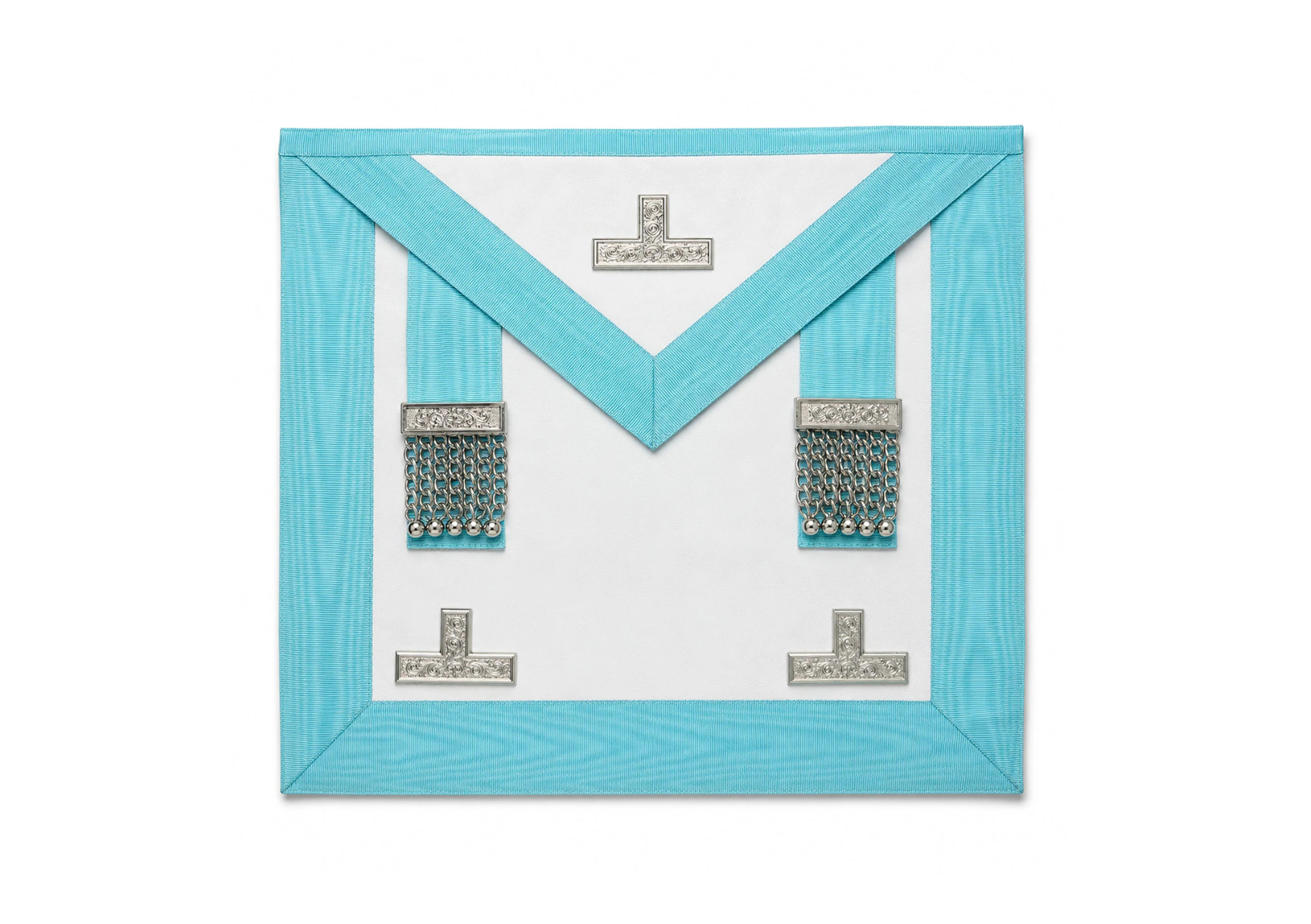
These differences record Masonic progress and experience. Every Freemason begins with the plain apron of an Entered Apprentice, regardless of his occupation, income or position outside the Lodge.
An apron may also carry personal or family significance. A member may sometimes wear an apron previously used by his father, grandfather or another relative, provided it is appropriate to his Masonic rank and complies with the requirements of the New Zealand Constitution. Such an apron can carry a family history that a newly purchased item could not replace.
What do the blue collars mean?
The broad collars worn by Lodge officers identify the responsibilities they are carrying during the meeting.
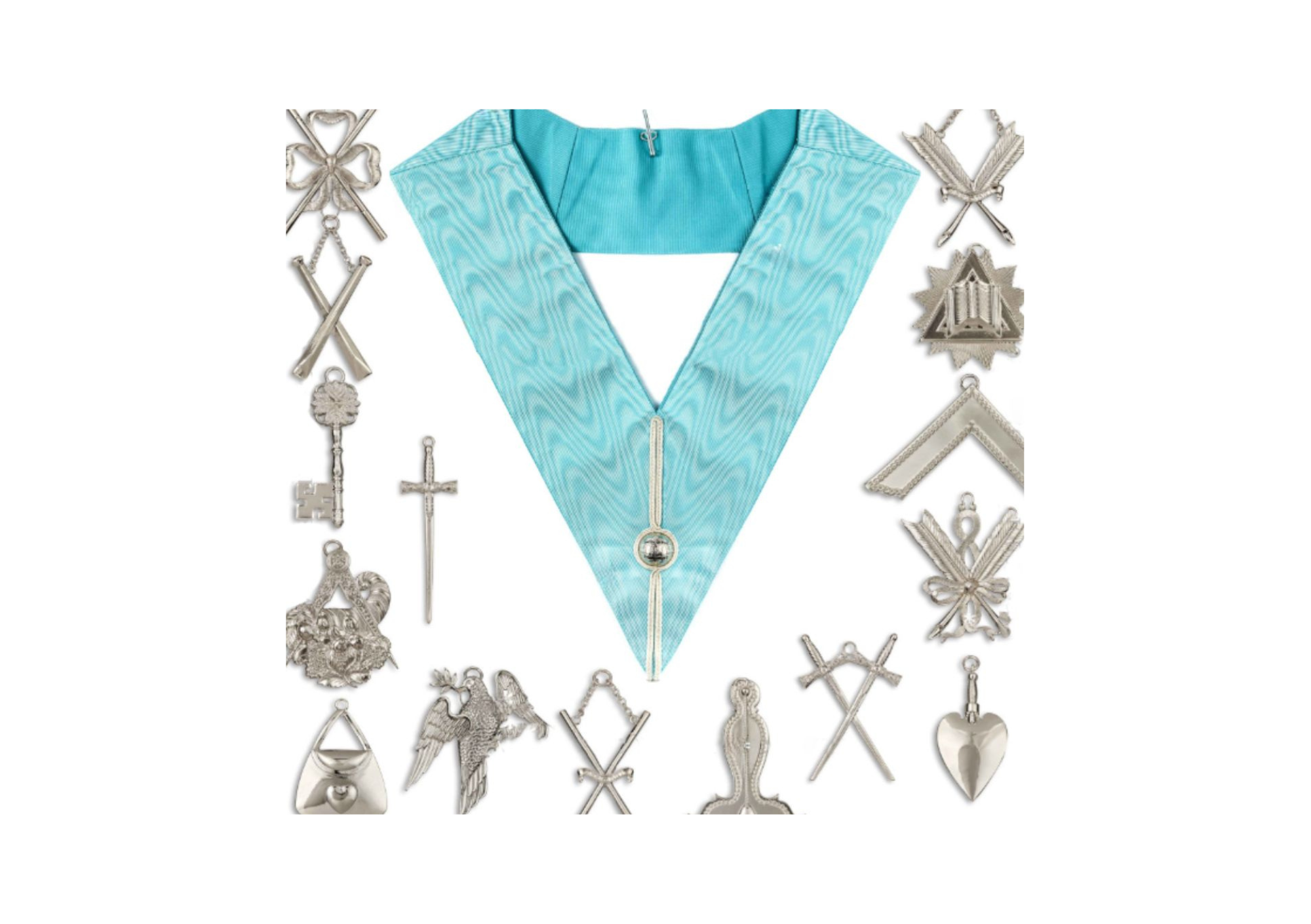
Officers of a New Zealand Constitution Craft Lodge wear sky-blue collars. Suspended from each collar is a silver-coloured jewel representing the office.
The Master wears the square, the Senior Warden wears the level and the Junior Warden wears the plumb rule. Other officers have their own recognised emblems connected with the duties they perform. The Treasurer’s jewel is a key. The Secretary’s consists of two crossed pens. The Deacons wear the dove and olive branch, while the Tyler’s jewel is a sword. These symbols allow members and visitors to recognise who is responsible for each part of the meeting.
A visiting Freemason may not know the individual members of another Lodge, but he can still identify its Master, Wardens and other officers from their collars.
Officer collars normally belong to the Lodge rather than to the men wearing them. When an officer completes his term, the collar is passed to his successor. The Brother has been entrusted with the office for a time and is expected to pass its responsibilities on in good order.
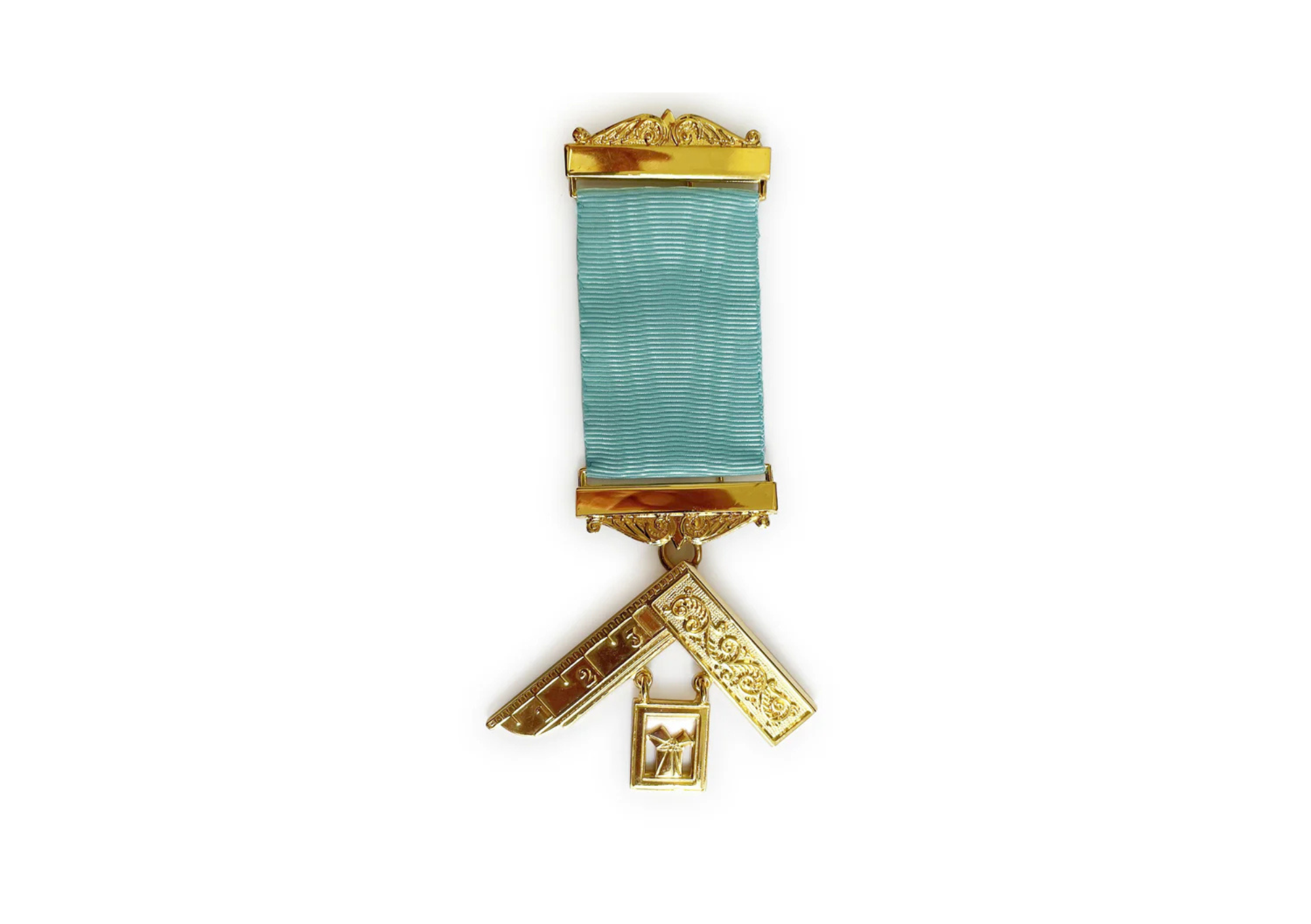
Past Masters may wear a similar sky-blue collar with silver braid and the prescribed Past Master’s collar jewel. The New Zealand design includes a square with a representation of the forty-seventh proposition of the first book of Euclid suspended within it.
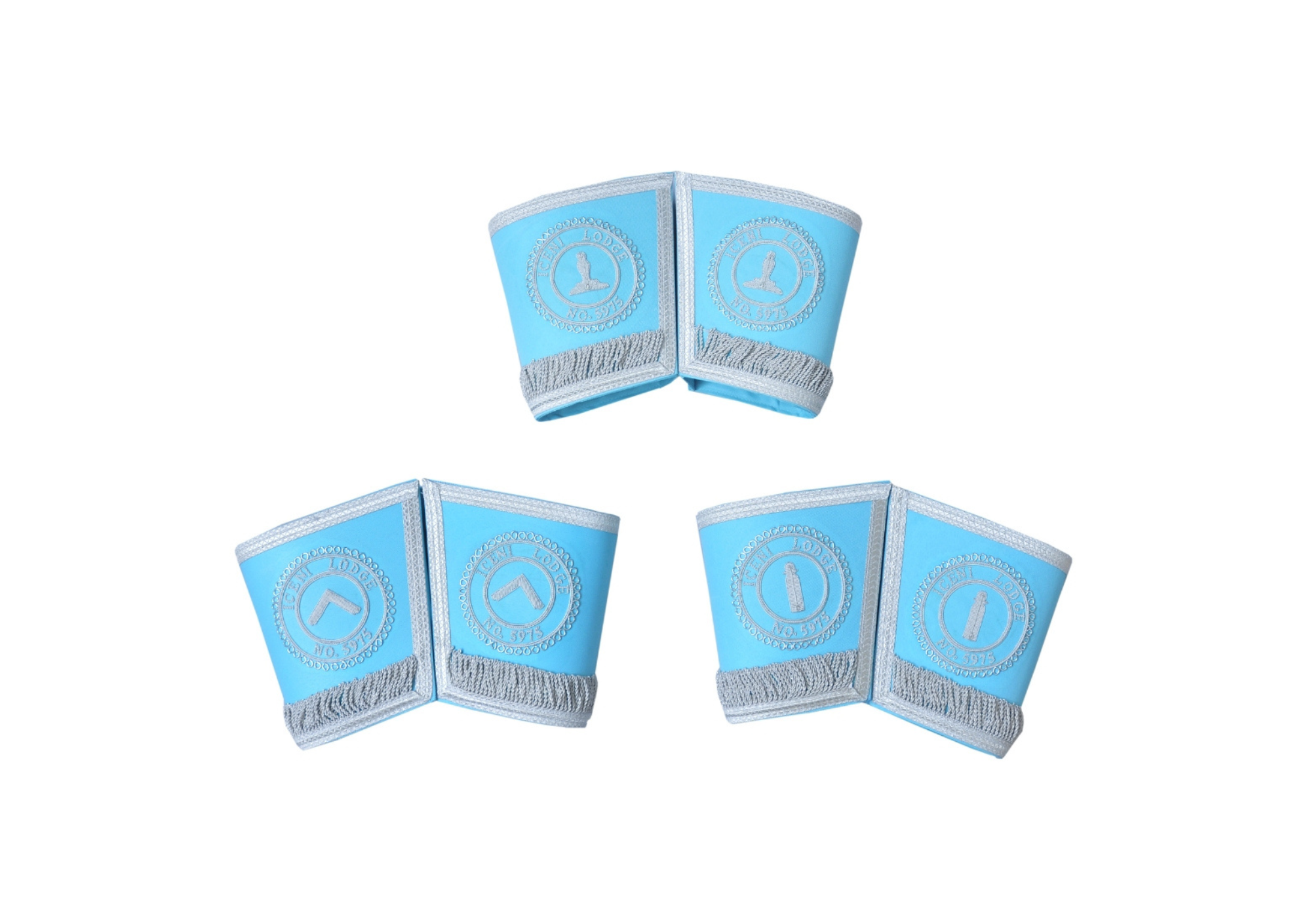
The Master and Wardens may also wear gauntlets. These are the decorated cuffs sometimes seen on the forearms of Lodge officers.
What do Masonic breast jewels mean?
Some Masonic jewels are worn on the breast of the jacket rather than suspended from a collar. These are commonly called breast jewels.
They do not all have the same meaning. A breast jewel might represent Royal Arch membership, charitable service or a connection with an important event in the history of a Lodge.
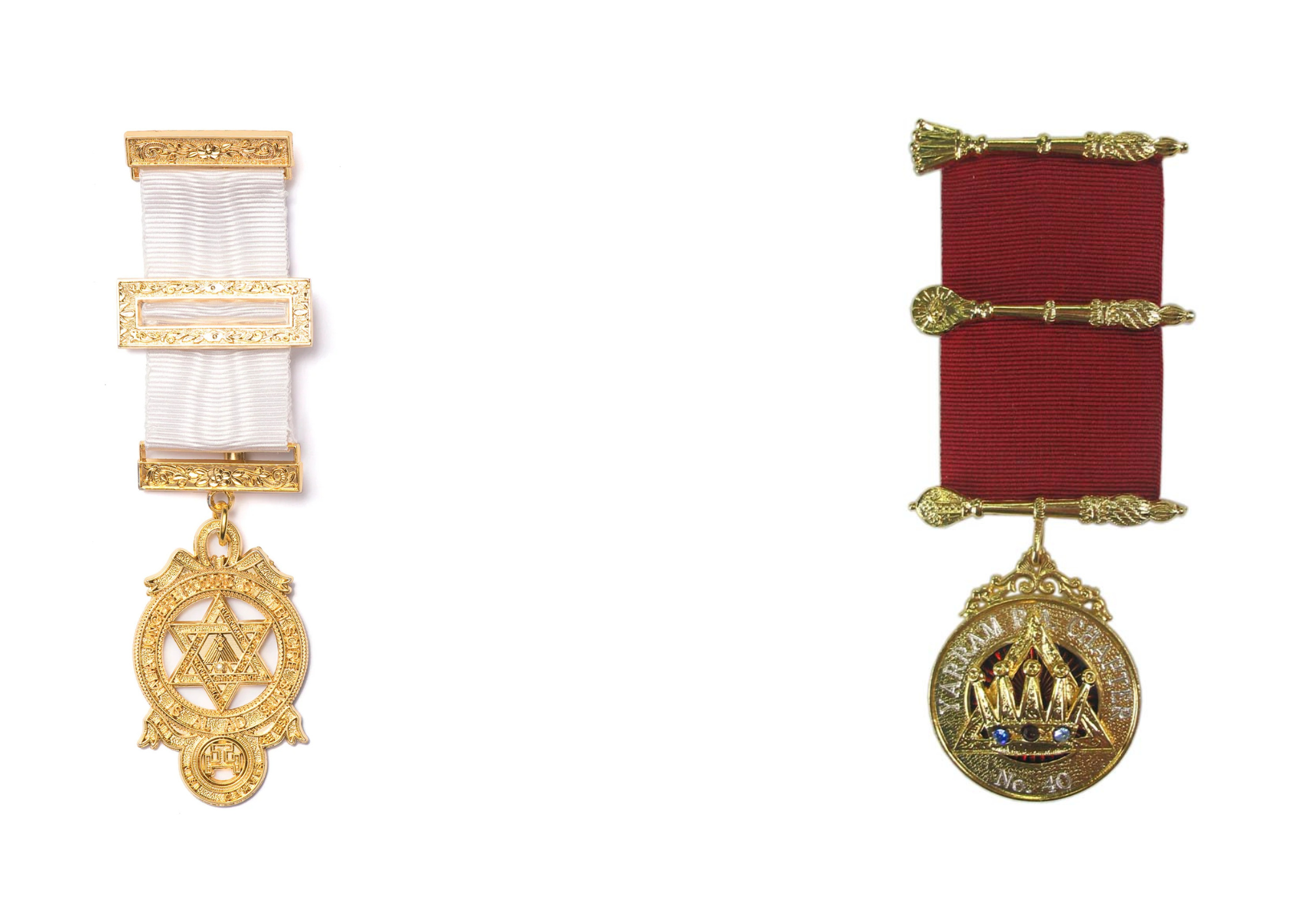
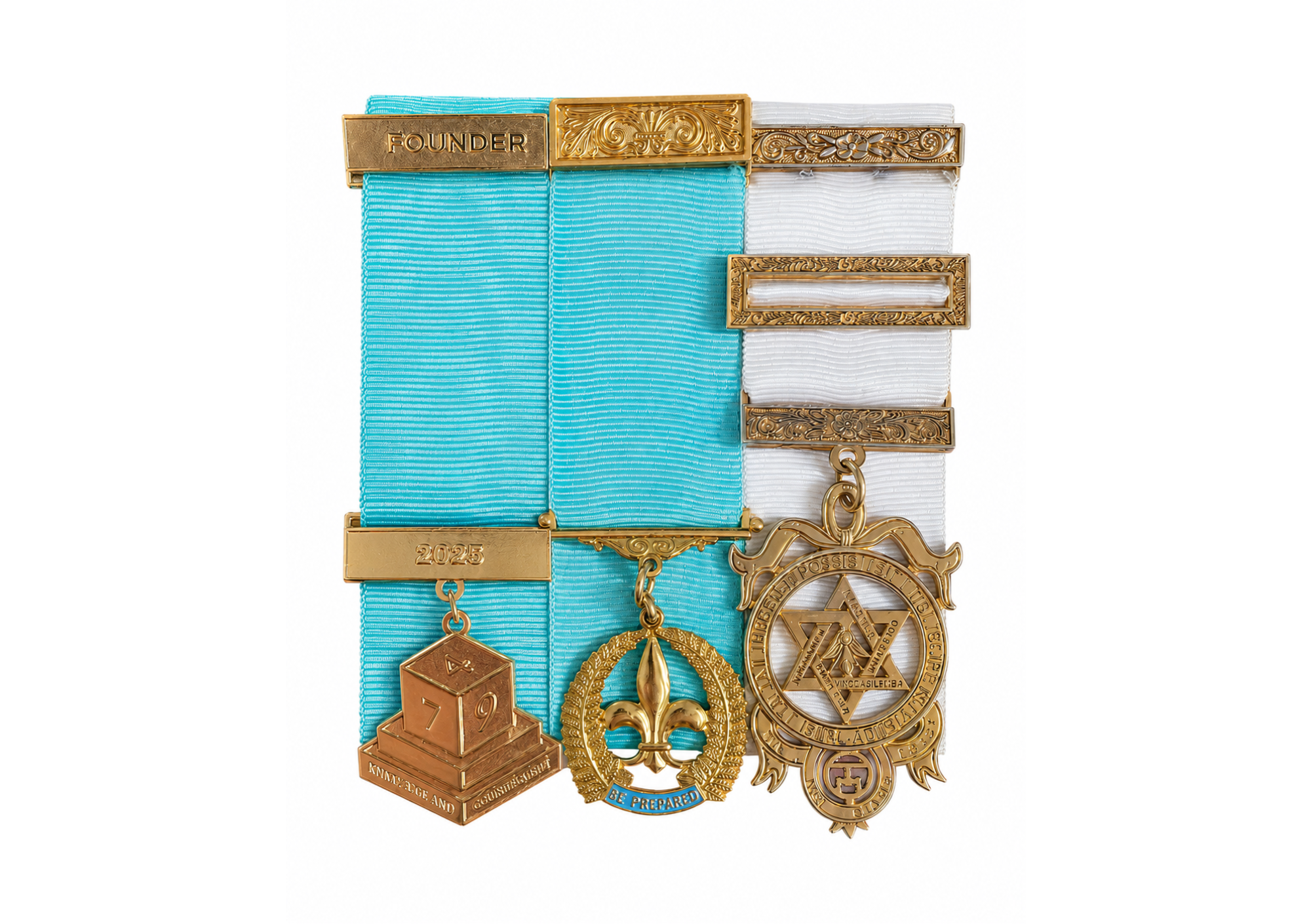
One of the most recognisable examples in New Zealand is the Royal Arch jewel. It is worn on the left breast by Royal Arch Companions. The colour of its ribbon indicates something of the Companion’s experience or office within the Royal Arch. A white ribbon is worn by a Companion who has not been installed as a Principal. Crimson is worn by an Installed Principal. A tricoloured ribbon is worn by Grand Superintendents and Grand Officers.
Past Masters are formally identified by the prescribed Past Master’s collar and collar jewel. Some Lodges have also presented a Past Master’s breast jewel or commemorative item after a Brother completes his term as Master. This is a local custom rather than the nationally prescribed sign of a Past Master and must comply with the rules governing authorised regalia.
A Founders’ Jewel records that a Brother became a member of a new Lodge at the time of its formal constitution. Its design must be approved and its wearing authorised. It is more than an ordinary Lodge badge or souvenir. It marks a direct connection with the beginning of that Lodge.
Centenary and 150th Anniversary Jewels may similarly connect a member with an important milestone in his Lodge’s history. They are worn by members entitled to them under the authority granted for the particular anniversary.
Charity Jewels recognise charitable effort and continued contribution to Freemasonry or the wider community. New Zealand Charity Jewels have been issued in bronze, silver and gold forms and are traditionally worn closest to the heart. Charitable service does not only mean giving money. It can include years spent organising projects, volunteering, supporting community organisations or quietly providing practical assistance to people in need.
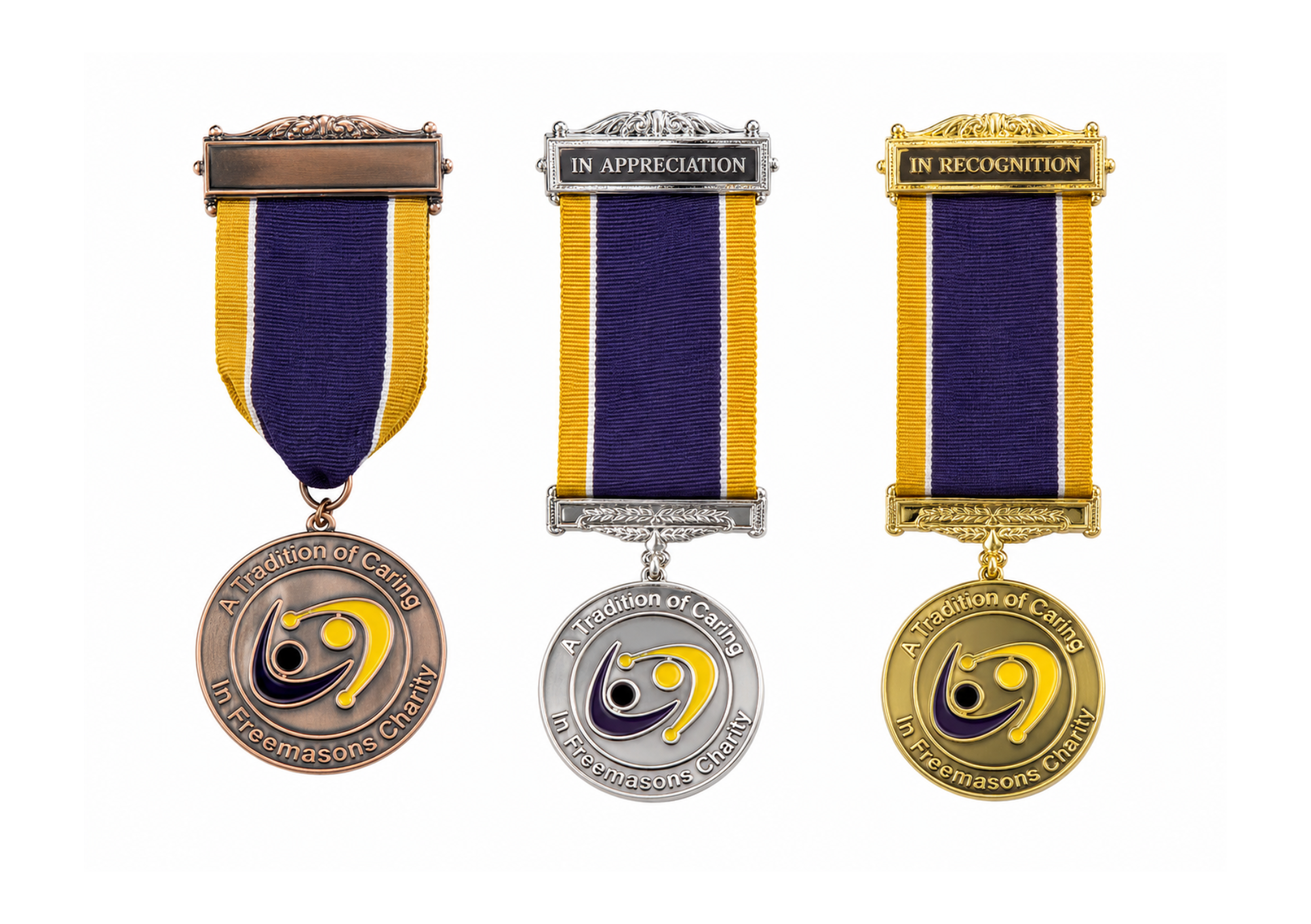
Two experienced Freemasons may therefore wear very different groups of breast jewels, reflecting different Lodges, offices and forms of service. Their number is not a measure of a Brother’s importance, and many members give years of quiet service without receiving or choosing to wear numerous decorations.
Long service Badges
In New Zealand, long membership is commonly recognised with service badges rather than service jewels.
A Brother who has completed at least 25 years of qualifying membership and remains in good Masonic standing may receive a Twenty-Five Year Service Badge. It may be worn in Lodge and in public.
At 50 years, a Brother may receive a Fifty-Year Service Badge together with an appropriate miniature for public wear. Each subsequent period of ten years may be recognised by the addition of a bar.
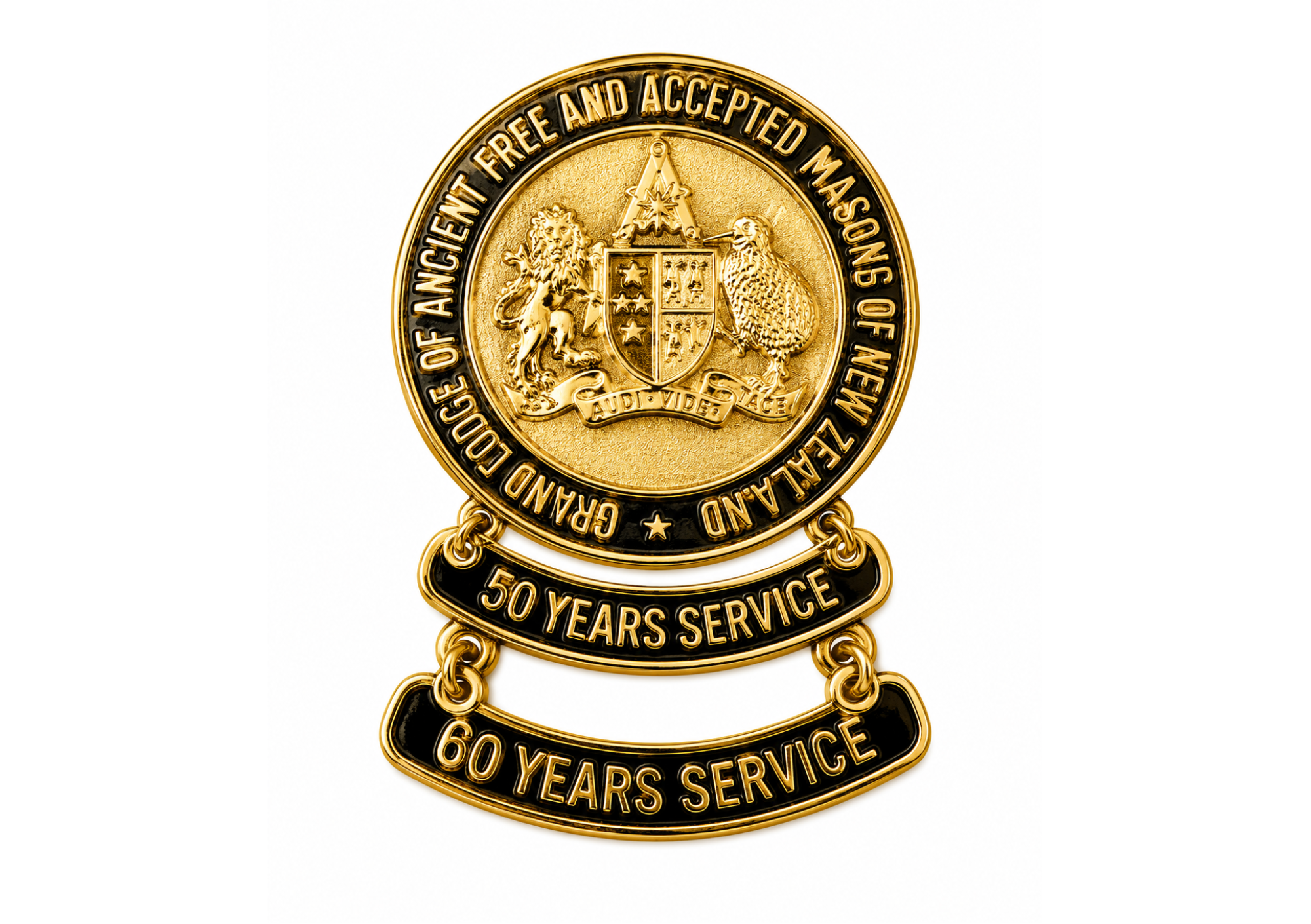
These presentations are often important occasions in the life of a Lodge. A 50-year badge does not simply mark the passage of time. It can represent decades of meetings attended, friendships formed, candidates supported, offices carried and changes witnessed within both the Lodge and the wider community.
Calling these items service badges rather than service jewels may sound like a small distinction, but it reflects the terminology and practice of Freemasonry in New Zealand.
Honours and Recognition
Not all Masonic insignia identifies a Brother's office or rank. Some items are awarded in recognition of service to Freemasonry rather than the office a Brother holds. The Grand Lodge of New Zealand recognises outstanding service through a number of national honours. These honours are relatively uncommon and reflect a Brother's dedication to his Lodge, his community and the wider Craft over many years. Some are accompanied by a wearable insignia, while others are presented as a certificate.
Grand Lodge Certificate of Merit: Recognises commendable service to Freemasonry in New Zealand. Unlike the other national honours, it is presented as a certificate and does not include a wearable insignia.
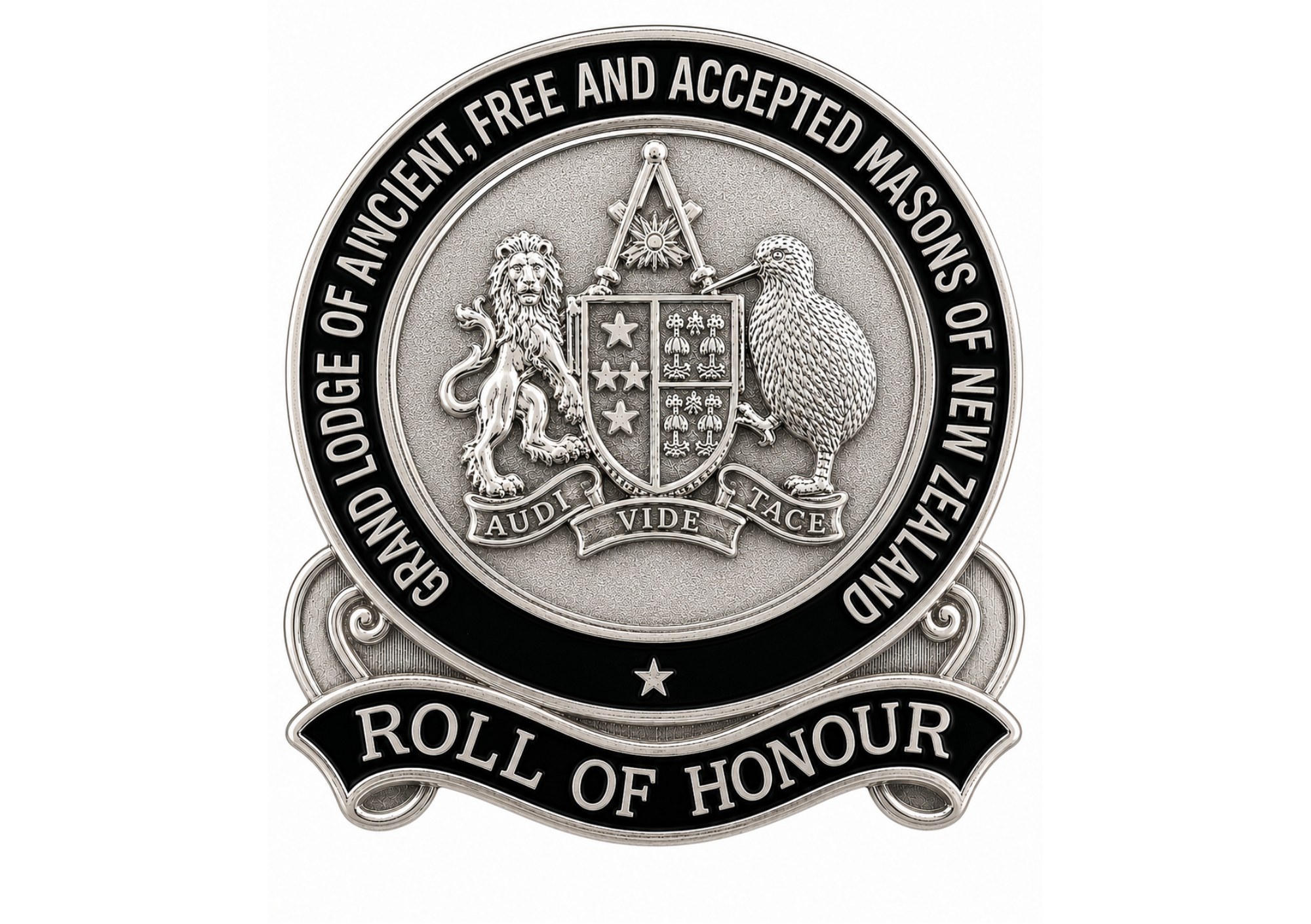
Grand Lodge Roll of Honour (R.H.): Recognises distinguished service to Freemasonry. Recipients are entitled to wear the Roll of Honour jewel and may use the letters R.H. after their name.
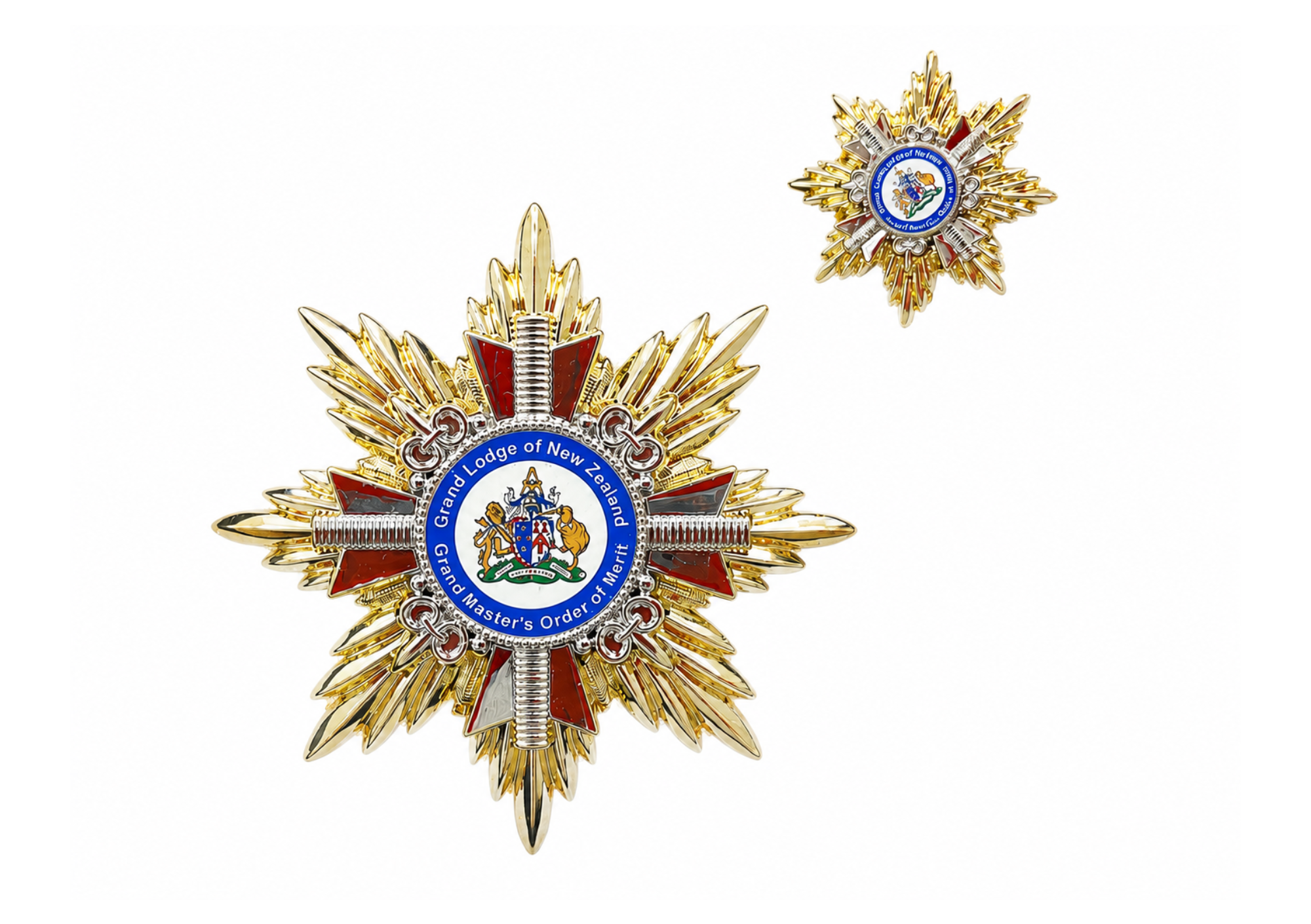
Grand Master's Order of Merit (O.M.): Awarded to Brethren holding Grand Lodge rank who have rendered sustained and meritorious service to the Craft. Recipients wear the Order's distinctive breast insignia and may use the letters O.M. after their name.
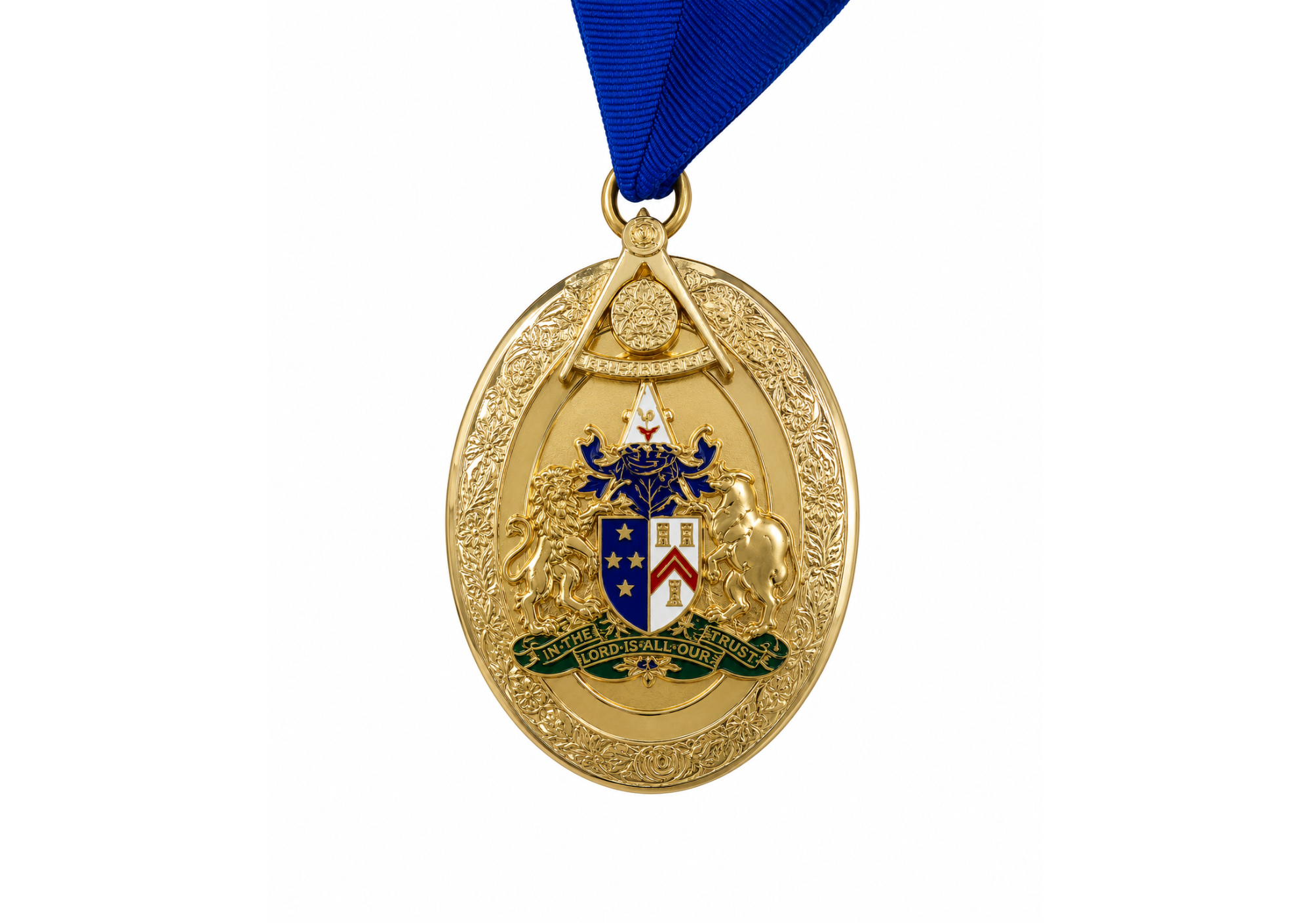
Grand Master's Order of Service to Masonry (O.S.M.): The highest personal honour that can be conferred by the Grand Lodge of New Zealand. It recognises exceptional service to Freemasonry and is limited to a small number of living recipients. Members wear the Order's distinctive collarette and jewel and may use the letters O.S.M. after their name.
Why is some Masonic regalia blue and gold?
Visitors to an Installation, an official visit or another major Lodge occasion may notice regalia that is more elaborate than the usual sky-blue and silver worn by Craft Lodge officers. This is generally Grand Lodge regalia.
Lodge Tawhiri No 166 and other New Zealand Constitution Lodges operate under the Grand Lodge of New Zealand. Grand Lodge officers carry responsibilities that extend beyond one Lodge, often across a region, a division or the country.
Grand Lodge regalia identifies the office or rank a Brother holds, or has previously held, within that wider organisation. It is not another degree of Freemasonry. Most Grand Lodge regalia uses garter blue and gold. Aprons and collars may include gold braid, gilt emblems, fern decoration and other details appropriate to the office.
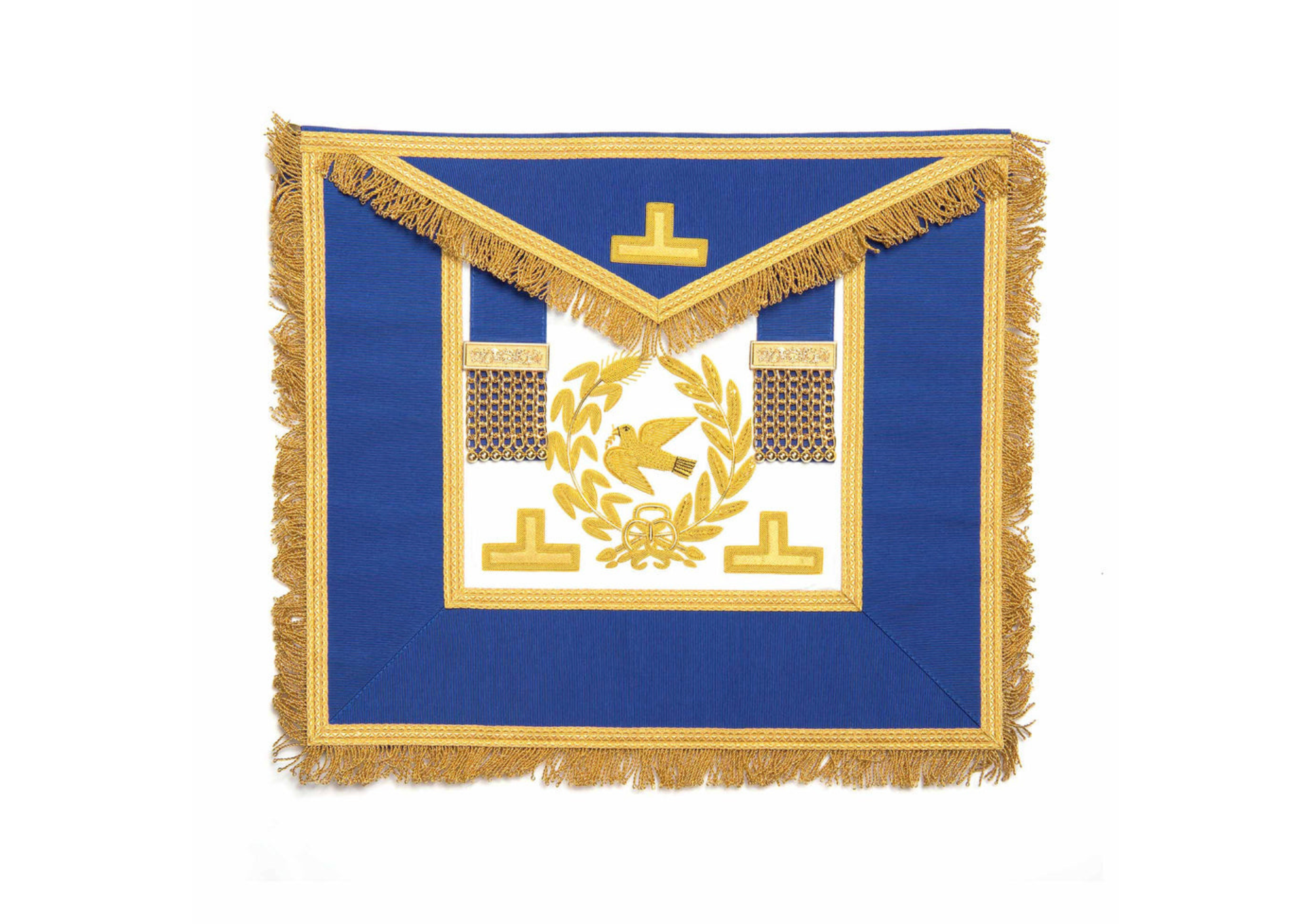
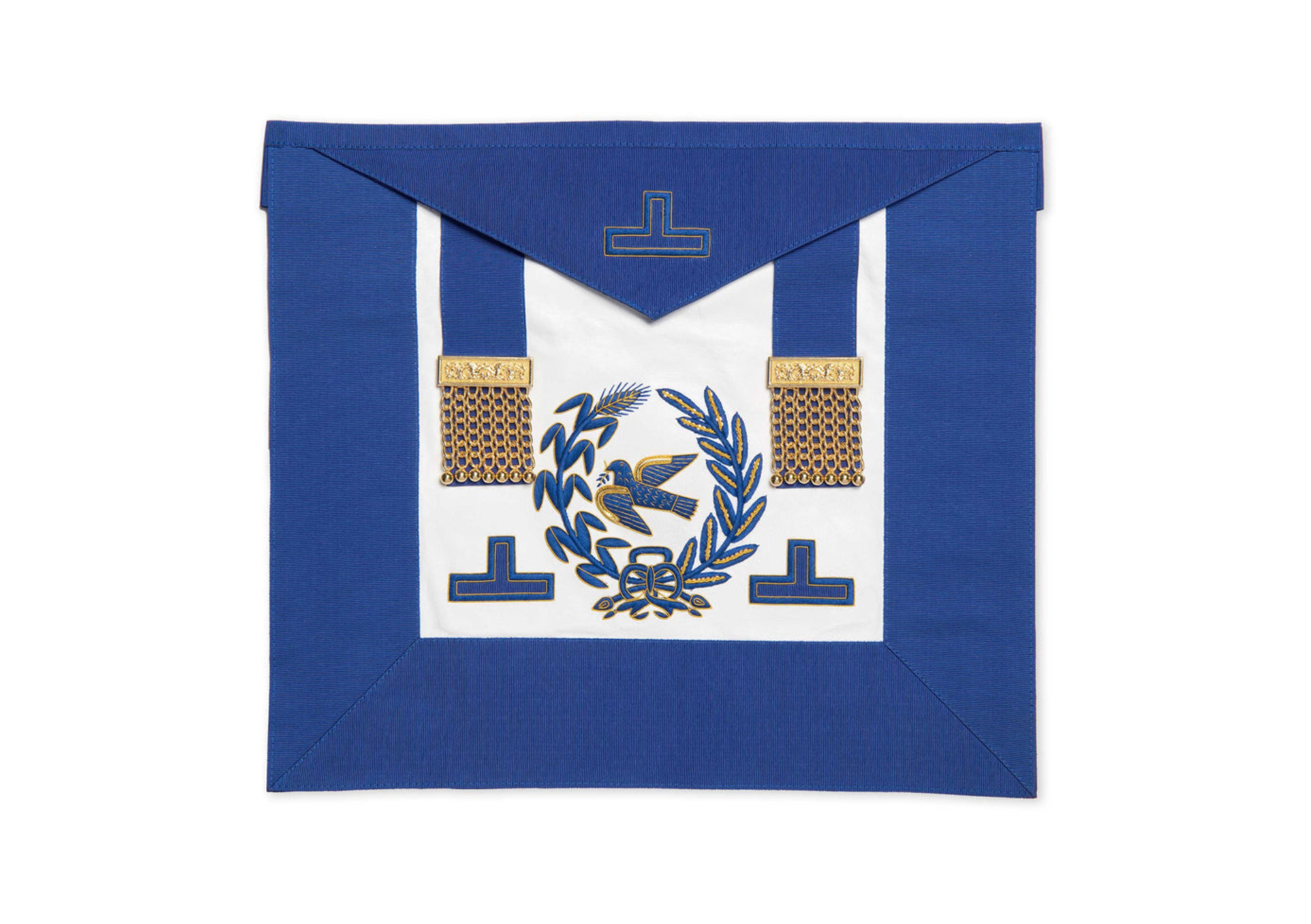
Grand Stewards are deliberately distinctive. Their regalia uses crimson and silver rather than garter blue and gold, making them easy to recognise while they carry out their duties at Grand Lodge and regional occasions.
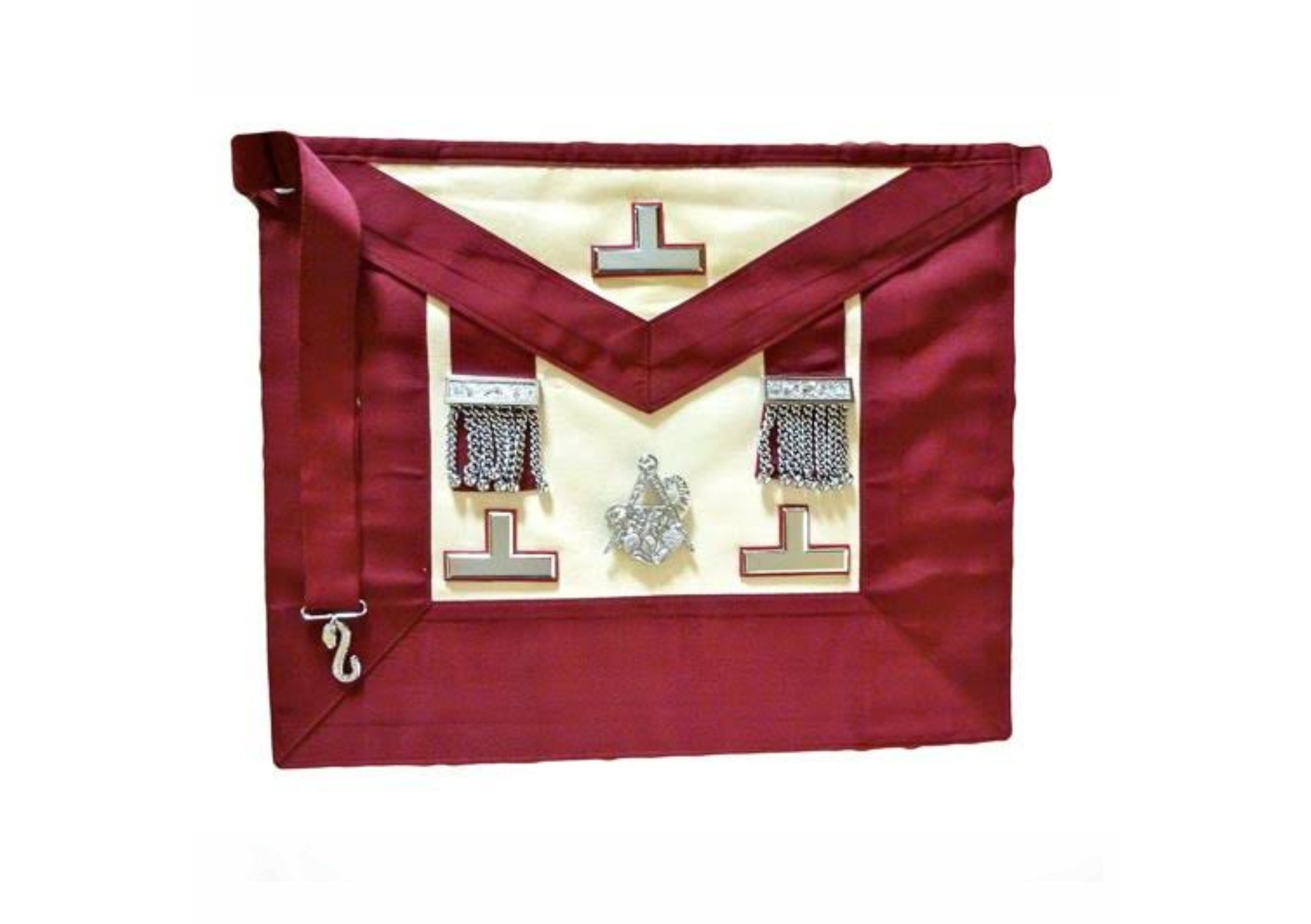
Grand Lodge and Craft Lodge regalia are not worn together. A Brother wears the regalia appropriate to the role he is performing and the nature of the occasion.
The additional ornamentation reflects the office and the occasion. It records that the wearer has accepted duties within the wider structure of Freemasonry in New Zealand. Within his own Lodge, he remains a Brother among Brothers.
Does a new member need to buy regalia?
A prospective member does not need to purchase regalia before joining Freemasonry.
The Lodge explains what is supplied, loaned or purchased at each stage. Collars, gauntlets and other items belonging to Lodge offices are normally provided by the Lodge.
It is sensible not to buy an apron or other ceremonial item without first asking the Lodge. Regalia differs between degrees, offices and Masonic constitutions. Something advertised online as “Masonic regalia” may not be correct for a member of a New Zealand Constitution Lodge.
There is also no expectation that a new member will immediately recognise every apron, collar, jewel or badge. These things become familiar through attending meetings, visiting other Lodges and asking questions.
Practical questions about how to wear an apron, arrange breast jewels or care for regalia are entirely normal. Every experienced Freemason once had to learn the same things.
More than decoration
Masonic regalia can appear complicated when it is first seen, but each item has a practical purpose.
Aprons record progress through the Craft degrees. Collars identify offices and responsibilities. Jewels and badges may recognise membership, service, charitable contribution or a connection with Lodge history. Grand Lodge regalia identifies duties carried within the wider organisation of Freemasonry in New Zealand.
Regalia is not meant to become a competition or a display of personal importance. Its value lies in what it represents: work undertaken, responsibilities accepted, service given and history remembered.
The regalia worn at Lodge Tawhiri No 166 in Hamilton follows this wider New Zealand pattern.
None of this needs to be understood before making an enquiry. For a man considering Freemasonry in Hamilton or elsewhere in Waikato, a conversation with a Lodge member is enough to begin. The meaning of the regalia becomes familiar over time.